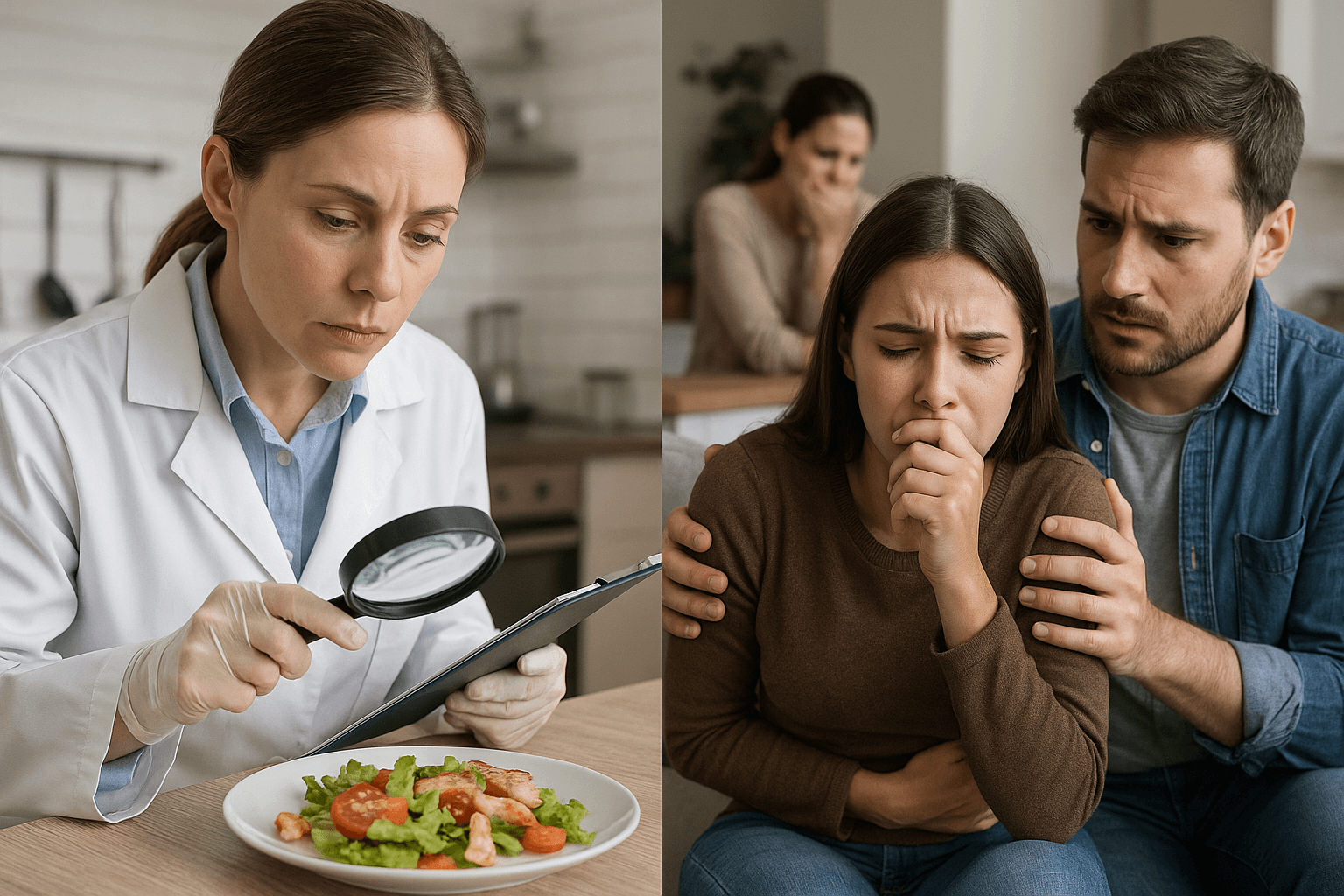
In recent times, food poisoning incidents in Turkey have become more than a routine news flow. We see similar cases in various fields, from school cafeterias to catering firms, from supermarket products to ready-to-eat foods. This picture actually indicates serious problems at important points in the food safety chain.
Food poisoning is not just a matter of "I ate something wrong". It is a systemic food safety issue, and the solution should also be sought within the system.
Why Are Food Poisoning Cases Increasing?
The main factors that lead to the weakening of food safety can be summarized as follows:
-Decrease in inspection frequency
-Improper implementation of hygiene rules in production
-Breakdown of the cold chain during transportation and storage
-Increase in informal production
-Insufficient use of expert professions in processes
When these reasons come together, the resulting picture turns into a public health risk affecting the general population.
Food Safety is a Chain
Food safety is not only related to the food that comes to the plate. The process begins in the field and extends to the table. Production, processing, storage, transportation, cooking, service…
Every link in this chain requires scientific control. Negligence at one point disrupts the entire system. The recent cases we have encountered in Turkey indicate that critical points in this chain need to be improved.
Nutrition: The Invisible Foundation of Food Safety
Although nutrition is still known by most people as just writing individual diets, the field is much broader. Nutritionists:
-Plan safe menus in mass feeding systems
-Identify cooking, storage, and service errors
-Analyze foodborne illnesses
-Contribute to HACCP processes
-Evaluate risky food groups
Therefore, a lack of nutritionists in mass feeding services leads to an increase in risk. Many of today’s mass poisoning cases are a result of this deficiency.
Food Engineering: The Guarantee of Safe Production
The responsibility for the production phase lies with food engineers. Food engineers:
-Ensure hygiene and quality management on the production line
-Analyze microbiological risks
-Control shelf life, packaging, storage, and thermal processing processes
-Implement HACCP and ISO 22000 practices
It is not possible to ensure safety on a production line where a food engineer is absent. Recent cases also confirm this reality.
Food Safety Cannot Be Achieved Without Expertise
The common point of the increasing food poisoning cases in Turkey is the exclusion of expertise. The issue is actually very clear:
-If there is no nutritionist, the risk in mass feeding increases
-If there is no food engineer, production processes become unsafe
-If inspections are not adequately carried out, the system becomes entirely fragile and public health is jeopardized.
Food safety can only be protected with a scientific approach.
Steps to Be Taken for a Solution
The solution to the food safety crisis is not as complicated as it is thought to be:
-Employment of food engineers in production facilities should be mandatory
-Nutritionists should be present in mass feeding systems
-Inspection mechanisms should be made regular and transparent
-Informal production should be prevented
-Public awareness of food safety should be raised
Safe food is not a choice; it is a fundamental necessity for public health.
Conclusion: Safe Food is Not Possible Without Science at the Center
The recent food poisonings in Turkey may seem like simple news on the surface, but they carry a much greater truth underneath: the lesser integration of experts into the inspection mechanism threatens public health.
Nutrition and food engineering are two fundamental pillars of this chain. These professions should be strengthened, and nutritionists and food engineers should be more actively involved in the fields of safe food production in Turkey; otherwise, providing safe mass feeding services will present challenges.
Author: Lecturer Dyt. Ece Uluoğlu